Hugh Wyndham Park
A rare genuinly local gem
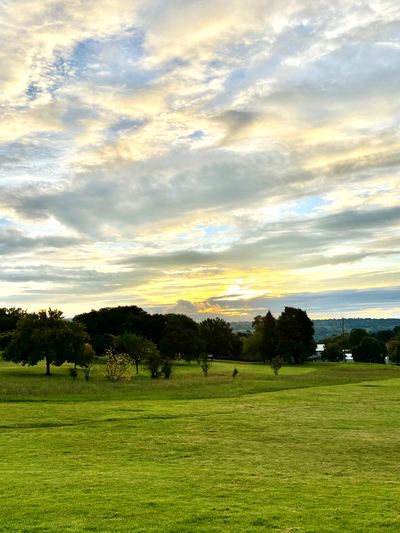
Hugh Wyndham Park sits in Dunkeld West, tucked between Hume Road, Kent Road and Northumberland Avenue. It is one of those rare Johannesburg spaces that still feels genuinely local. Children play, dogs negotiate the terms of friendship, walkers do their laps, nannies gather under the trees, and residents bump into neighbours they have meant to WhatsApp for three months.
What you will find at the park
Hugh Wyndham Park offers:
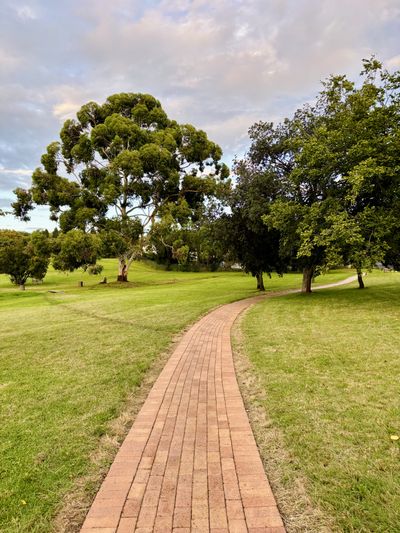
- A paved walking and running route around the park, used by walkers, runners, pram-pushers and dog walkers.
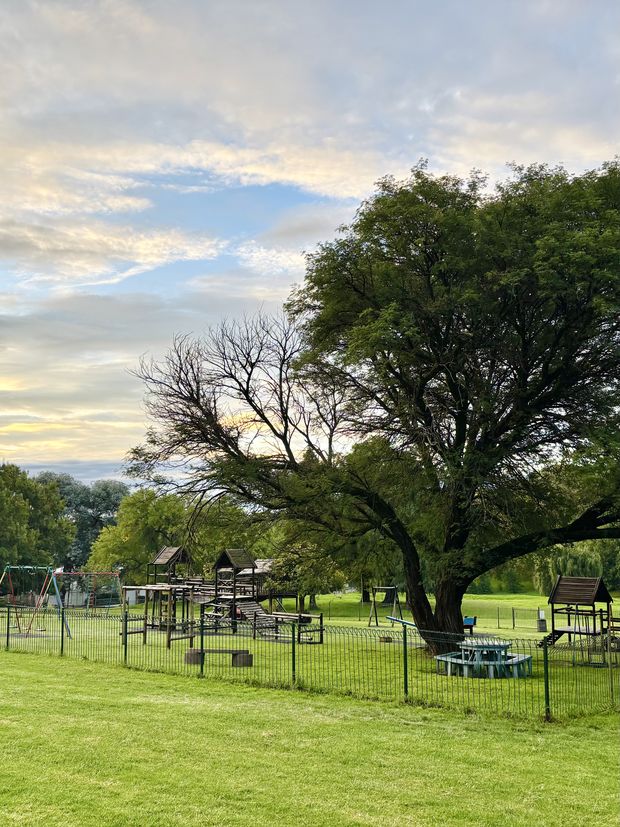
- A fenced children’s play area, upgraded through community support, giving children a safer space to play.
- Open lawns for informal games, picnics and slow Sunday afternoons.
- Cricket practice nets, used by local residents and children.
- A natural spring and wetland area, which supports birdlife, indigenous plants and biodiversity.
- Dog-friendly open space, provided owners act responsibly and clean up after their dogs.
Please keep the park clean, use the bins, and pick up after your dogs. Your dog did not read the sign. You did.
A park with deep local roots
Hugh Wyndham Park sits where Dunkeld West and Craighall Park meet. The broader area developed from old farmland into leafy residential suburbs during the early 20th century. Local history records that William Rattray bought Klipfontein farm in 1891 and named Craighall Park after his birthplace in Scotland. Residential stands in Craighall Park were first sold in 1911, and Dunkeld West developed alongside it as part of the same green suburban fabric. Both suburbs were later incorporated into the City of Johannesburg in 1938.
The park has always been shaped by this context. It is not just open land, it is part of the neighbourhood’s original green infrastructure. The natural spring and wetland are important remnants of the older Spruit ecology that existed before the surrounding suburbs were fully built up.
The old dam story
Many long-standing residents remember, or have heard, that there was once a dam in or near the park, which was later filled in. One version of the story is that this followed a drowning around 50 years ago.
What can be said safely is this: the park has a natural wetland and water history, and older residents’ memories suggest the landscape may once have looked quite different from the open green space we see today. We would welcome photographs, old maps, newspaper cuttings or resident recollections that can help us record this part of the park’s history properly.
Community stewardship
Hugh Wyndham Park is maintained through a partnership between the City and Friends of Hugh Wyndham Park, which is part of the Craigpark Residents’ Association. The City provides the public land and baseline municipal responsibility, but the day-to-day difference is made by residents who contribute time, funds and energy.
Over the years, community support has helped improve the playground, protect the wetland, support security-related upgrades, maintain the cricket nets and keep the park cleaner and better used.
This matters.
A well-used park is safer, cleaner and more resilient than a neglected one. Public spaces do not look after themselves. If residents want a park that works, residents need to keep showing up. In a city where many public spaces are under pressure, Hugh Wyndham Park is proof that active residents can make a visible difference.